


From Toy Box to Trading Floor: How LEGO Became a Coveted Collector’s Item and Investment
For decades, LEGO was simply considered the gold standard of toys. Bright plastic bricks designed to snap together and unlock a child’s imagination. Parents bought them to foster creativity, engineers praised them as the foundation of problem-solving skills, and kids built worlds that stretched far beyond instruction manuals. But in the last two decades, LEGO has undergone an unexpected transformation. What was once confined to toy boxes and playrooms has now found a place in glass display cases, investment portfolios, and auction houses.

The Nostalgia Effect
Part of LEGO’s rise in cultural and financial value comes from nostalgia. Millennials and Gen Xers—many of whom grew up building pirate ships, castles, and Star Wars sets—are now adults with disposable income. Reconnecting with those childhood moments has driven demand for vintage or retired sets. What once cost $50 in the 1990s may now resell for hundreds, sometimes thousands, depending on rarity and condition.
Scarcity and Exclusivity
LEGO has also mastered the art of scarcity. Special-edition sets tied to major franchises (Star Wars, Harry Potter, Marvel, Architecture) are produced in limited runs and then retired. Once production halts, demand only intensifies. The 2007 “Millennium Falcon” Ultimate Collector’s Series set, originally priced at $499, has fetched over $5,000 in secondary markets when sealed in mint condition. Suddenly, buying a LEGO kit feels less like grabbing a toy and more like investing in a blue-chip collectible.
Bricks That Outperform Gold
It may sound absurd, but the numbers support the hype. Academic studies, including a well-cited analysis from the Higher School of Economics in Moscow, revealed that LEGO sets often appreciate faster than traditional asset classes like gold, fine art, and even stocks. Annual returns for select sets averaged around 11%, and some limited runs skyrocketed far beyond that. Unlike volatile stock markets, LEGO’s value is tied to tangibles—nostalgia, culture, and the finite availability of bricks in pristine packaging.
The Culture of Collecting
This shift is not purely financial. LEGO has become a lifestyle and a community. Adult Fans of LEGO (often referred to as AFOLs) gather in conventions, online forums, and local clubs to share creations, trade sets, and show off elaborate builds that rival museum installations. For many, collecting LEGO is as much about artistry and shared identity as it is about investment. Owning a set means owning a piece of pop culture history—a Star Wars battle scene, an architectural masterpiece, or even a nostalgic nod to the sets of their childhood.
Challenges in the Brick Economy
Still, investing in LEGO isn’t foolproof. Market value depends on several factors: whether the box is unopened, whether pieces are complete, and whether the set is tied to a franchise with enduring appeal. The difference between a set worth $200 and one worth $2,000 can hinge on a missing instruction booklet or a dented box corner. And like any investment, markets can fluctuate. The key is balancing passion with patience, enjoying the build but knowing when to preserve a set for future gains.
Play, Build, Invest
Perhaps the most fascinating part of LEGO’s evolution is how it continues to straddle two worlds: play and profit. A child might see an unopened box as a castle waiting to be built, while an investor sees a future return on investment. Both are right. The genius of LEGO is that it never lost its original purpose—to inspire creativity—even as it became an asset class.
Want to dive into the world of LEGO collecting yourself? Below, we’ve curated our favorite LEGO kits you can buy right now. Whether you’re building for fun, displaying for art, or holding for investment, these sets promise hours of enjoyment—and maybe, just maybe, a little future payoff. Happy building!
HERE IS OUR TOP LEGO SETS (KITS)
LEGO Star Wars Millennium Falcon (7,541 Pieces )

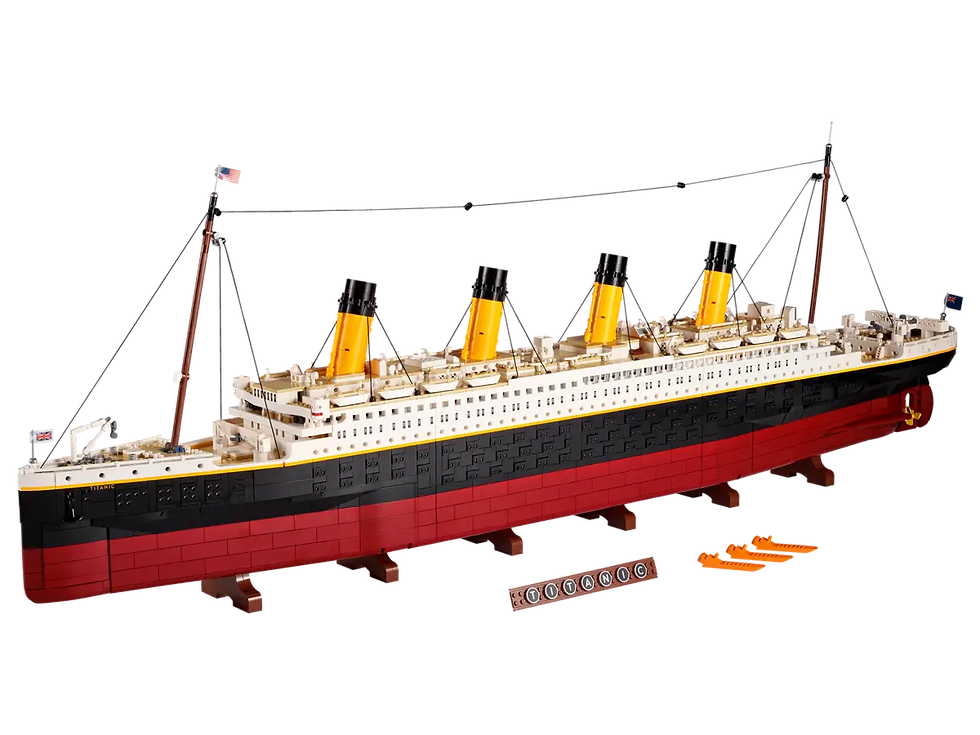
LEGO® Titanic ( 9,090 Pieces )
LEGO Creator Expert Volkswagen Beetle (1,167 Pieces)

LEGO Harry Potter Hogwarts Castle & Grounds (6,020 Pieces)

LEGO Technic Ferrari FXX K Toy Car (897 Pieces)

LEGO Ideas Twilight the Cullen House (2001 Pieces)

LEGO Architecture Notre-Dame de Paris Replica (4,383 Pieces)

LEGO Technic Volvo FMX Truck & EC230 Electric Excavator Building Toy (4.275 Pieces)

LEGO Technic Volvo EC500 Hybrid Excavator ( 2,359 Pieces)


Comments