


The Pokémon Card Renaissance: How Nostalgia, Rarity, and Social Media Sparked a Global Frenzy

A Childhood Game Turned Cultural Gold Rush
Few things have bridged generations as gracefully as the Pokémon Trading Card Game. What began in the late 1990s as a children’s pastime of lunchroom trades and neighborhood battles has evolved into a billion-dollar global obsession. From Tokyo to Toronto, Atlanta to Amsterdam, collectors are lining up for new releases, grading services are overwhelmed, and auction houses are reporting record sales.
The numbers tell the story: according to collectible-market analysts, Pokémon card values have surged by more than 3,800% since 2004—outpacing the S&P 500 by a stunning margin. This isn’t just a hobby anymore; it’s a cultural and financial movement fueled by nostalgia, design, and scarcity.
“What was once pocket change is now portfolio material.”
The Psychology Behind the Boom
The renaissance of Pokémon cards is powered by emotion and economics in equal measure. Millennials who once stored their binders in attic boxes are now adults with income—and a longing to reclaim pieces of their childhood. But beyond nostalgia lies a sophisticated ecosystem: collectors treat cards like fine art investors treat canvases. A holographic Charizard is no longer a toy—it’s a tangible, graded, insurable asset.
Social media amplified the phenomenon. YouTube “pack openings” have become spectator events with millions of views. TikTok creators unbox limited-edition sets in real-time suspense, while influencers like Logan Paul have turned rare cards into status symbols. Meanwhile, grading companies such as PSA and Beckett act as the new arbiters of authenticity and prestige, certifying condition and value with the gravity of auction-house experts.
Crown Jewels of the Pokémon World
At the heart of this frenzy lies a handful of mythical cards that define the market’s elite.The 1999 First Edition Shadowless Holographic Charizard—the fiery dragon that launched a thousand collectors—has fetched up to $420,000 in pristine PSA 10 condition. Even more elusive is the Pikachu Illustrator card, originally awarded to winners of a 1998 Japanese art contest. Only a few dozen copies exist, and one has sold privately for over $5 million.
Modern-era sets are not far behind. Evolving Skies and Fusion Strike feature “alternate art” designs like Umbreon VMAX or Gengar Alt-Art, each commanding thousands in high grades. And 2024’s Journey Together expansion introduced new low-pull “secret rares,” already sending collectors into frenzies at local card shops.
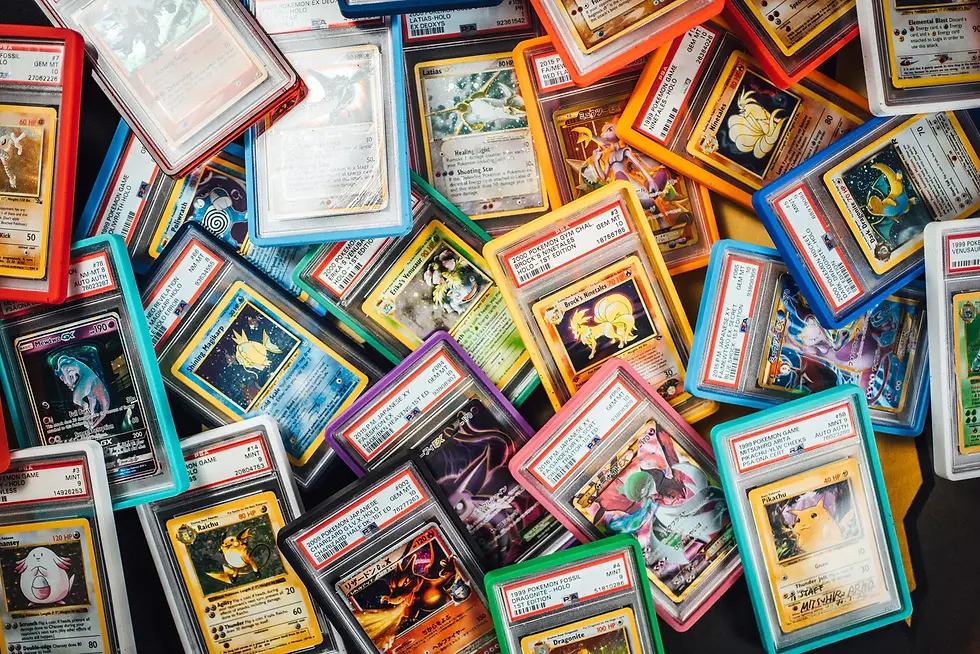
The 10 Most Collectible Pokémon TCG Sets of All Time
While thousands of sets exist, a few have cemented themselves as the core of collecting culture.
Base Set (1999 – 1st Edition Shadowless): The origin of it all; home of the iconic Charizard.
Neo Destiny (2002): Introduced “Shining Pokémon,” predecessors to today’s shiny variants.
Skyridge (2003): Final Wizards of the Coast set; famous for its low print run.
Team Rocket Returns (2004): A dark, stylish fan favorite among mid-2000s sets.
POP Series 5 (2007): Tiny 17-card run featuring ultra-rare Gold Star cards.
EX Holon Phantoms (2006): Coveted for sealed boxes and delta-species Pokémon.
Evolving Skies (2021): A modern classic known for alternate-art Eeveelutions.
Fusion Strike (2022): Packed with valuable chase cards like Gengar VMAX Alt-Art.
Celebrations (2021): Anniversary set reimagining nostalgic icons with new artwork.
Journey Together (2024): Latest wave blending art innovation with rarity economics.
These sets trace Pokémon’s cultural evolution: from the analog magic of the late ’90s to the hyper-collectible sophistication of modern releases.
How and Where to Join the Frenzy
The market’s energy is palpable both online and off.Local card shops remain vital gathering points—where enthusiasts trade, appraise, and swap stories. But most transactions now happen on digital platforms like eBay, TCGplayer, Whatnot, and Heritage Auctions, where sealed booster boxes and PSA-graded cards command fierce bidding wars.
Collectors entering the market should remember: condition is king. A near-mint card might be worth hundreds, while a gem-mint copy of the same card could be worth thousands. Always verify grading serials and use platforms like PriceCharting or CardLadder to research current values. As with art or real estate, provenance and authenticity define true worth.
A Mirror of Culture, Not Just Commerce
What makes the Pokémon card phenomenon extraordinary isn’t just its price tags—it’s what those cards represent. They’re a bridge between generations, proof that tangible media still carry emotional and financial weight in an increasingly digital world. For many collectors, each card isn’t just cardboard—it’s a memory, a piece of design history, a symbol of perseverance and imagination.
“Pokémon cards are where play meets permanence—nostalgia meets investment.”
The parallels to other collectible markets are striking. Just as mid-century architecture has become both art form and asset class, Pokémon cards now occupy a similar cultural tier: coveted for both their story and their scarcity.
Closing Thoughts
Whether you’re a lifelong fan rediscovering your binder or a newcomer drawn by the thrill of rarity, one thing is certain: the Pokémon Trading Card Game has transcended its origins. It’s now a living, breathing marketplace of art, memory, and ambition—a world where a 25-year-old Charizard can rival a Picasso in price per square inch.
The world caught “Poké-fever” once in 1999. In 2025, it’s burning hotter than ever—and this time, it’s serious business.
🟡 Quick Stats:
3,821% growth in market value since 2004
PSA graded cards can multiply value 10–20x
Modern chase cards: Umbreon VMAX, Gengar Alt-Art, Mew EX
Rarest card ever sold: Pikachu Illustrator — $5 million


Comments